
Small apartments are great until laundry day. Without a yard, a dedicated laundry room or space for a big dryer, wet clothes end up everywhere: chairs, door frames, the shower rod, the radiator. The good news is that air-drying in a small space is completely doable — it just takes a little strategy. Here are the tips that make the biggest difference.
The quick answer
Remove as much water as possible before hanging, space garments apart, keep air moving, and go vertical — use walls, doors and windows instead of the floor. A fold-away, wall-mounted rack gives you the most drying space for the least room.
Get clothes drier before you hang them
- Add an extra spinA second high-speed spin cycle pulls out a surprising amount of water, which cuts drying time a lot.
- Shake every piece outA quick snap removes wrinkles and opens up the fabric so air can reach it.
- Sort by weightHang heavy items like jeans and towels where air moves best, and light items like T-shirts and socks in the tighter spots.
Give clothes room to breathe
- Don’t overcrowdGarments touching each other trap moisture. Leave a gap between pieces — it is the single biggest factor in drying speed and freshness.
- Use hangers for shirtsShirts and dresses dry faster, and with fewer wrinkles, on hangers than folded over a bar.
- Turn thick items inside outHoodies, jeans and pockets dry more evenly when the thickest layers face out.
Keep the air moving
- Open a windowEven a crack creates airflow and lets moisture escape instead of settling on walls and windows.
- Add a fan or a dehumidifierA fan speeds up evaporation; a dehumidifier pulls moisture out of the air and is a lifesaver in humid climates.
- Run the bathroom fanIf you dry in the bathroom, keep the exhaust fan on or the door open so the room doesn’t turn into a steam box.
Go vertical: use walls, not floors
In a small home, floor space is the most valuable real estate you have. The classic folding rack eats a big chunk of it every laundry day. The smarter move is to put your drying space on the wall:
- Over-the-door hooksGreat for a couple of towels or a robe, but limited in capacity.
- Shower rod and tension rodsHandy in a pinch, though clothes bunch together and the bathroom stays humid.
- A fold-away wall-mounted rackThe best of both worlds: plenty of hanging space when it is open, nearly invisible when it is folded. Look for one that doesn’t require drilling if you rent.
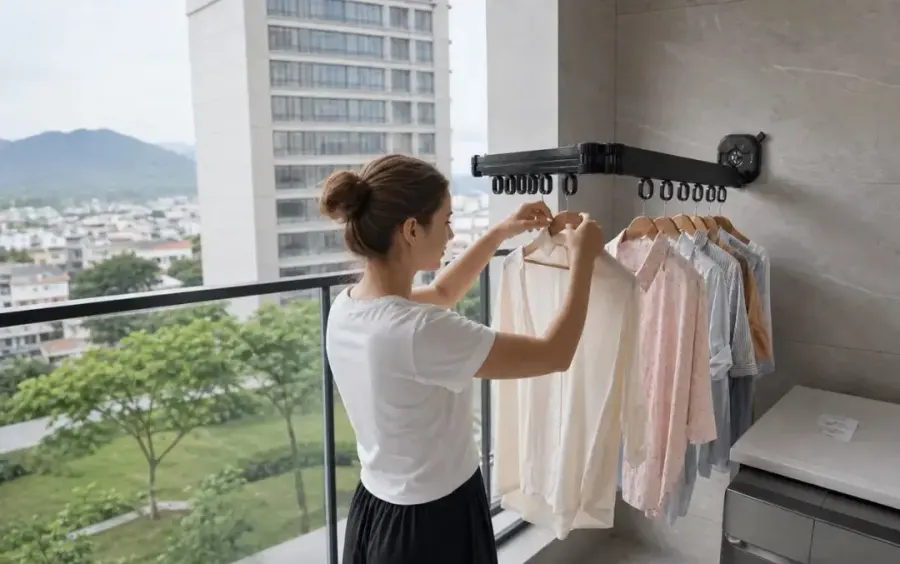
Don’t forget the balcony
If you have a balcony, even a small one, use it. Sunlight and a breeze dry clothes fast and naturally freshen them. Check your building rules first: some apartments don’t allow laundry hanging over the railing, but a rack mounted against the wall or glass usually keeps things neat and out of sight.
Our favorite small-space solution
For most apartments, the biggest upgrade is a wall-mounted drying rack that folds away. The one we recommend is the Qinux Hangeroox: it installs without drilling using a vacuum suction cup, its aluminum arms extend up to 10 inches and rotate, sliding hooks keep clothes spaced so they dry evenly, and it folds flat against the wall when you are done. Claudia, an owner in a small apartment, summed it up: “Now I can dry clothes comfortably without cluttering up the living room all the time.”
Frequently asked questions
How can I dry clothes fast indoors without a dryer?
Give them an extra spin cycle, shake each piece out, hang garments with space between them, and keep air moving with an open window, a fan or a dehumidifier. Spread-out clothes in a warm, ventilated spot dry far faster than a crowded rack in a closed room.
Why do my clothes smell musty when I dry them inside?
Musty smells come from clothes staying damp too long. The usual causes are overcrowding, poor airflow and high humidity. Hang fewer items with more space between them, ventilate the room, and avoid drying in a closed, steamy bathroom without the fan running.
Is it bad to dry clothes inside your apartment?
Not if the room is ventilated. Wet laundry releases moisture into the air, so open a window, run the bathroom fan or use a dehumidifier while clothes dry to keep humidity and condensation in check.